If you have ever tasted hot, buttery pav bhaji at a Mumbai street-food stall, you probably know why this dish is loved by so many people. The spicy vegetable bhaji, toasted pav, fresh coriander, chopped onions, and a squeeze of lemon make a combination that is hard to resist.
The good news is that you do not need to visit a restaurant to enjoy the same delicious taste. With a few everyday vegetables, butter, tomatoes, and the right combination of spices, you can prepare restaurant-style pav bhaji in your own kitchen.
This homemade pav bhaji recipe gives you a thick, flavourful, slightly tangy bhaji with a rich colour and a smooth texture. Serve it with buttery toasted pav, and you have a satisfying meal for breakfast, lunch, dinner, or an evening snack.
In this article, you will learn how to make Mumbai-style pav bhaji step by step, including the exact ingredients, cooking method, and simple tips to get a restaurant-like taste at home.
What Is Pav Bhaji?
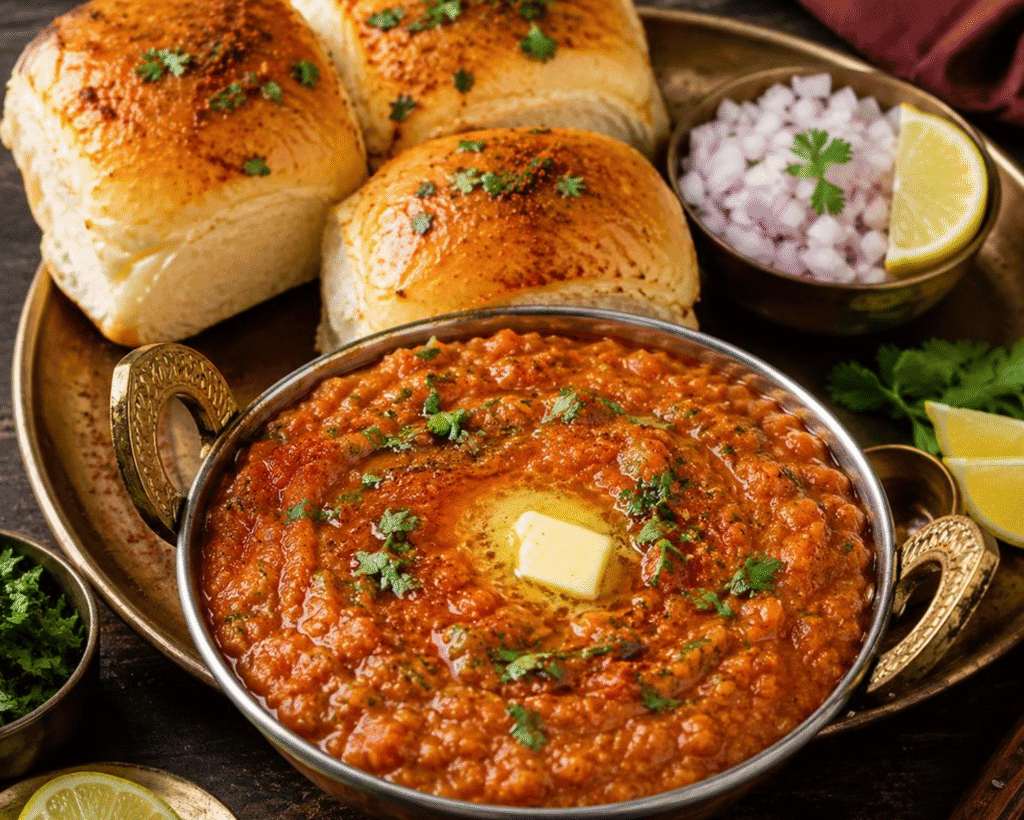
Pav bhaji is a popular Indian street-food dish that originated in Mumbai. It consists of two main parts: bhaji, a spicy mashed vegetable curry, and pav, soft bread rolls toasted with butter.
The bhaji is usually prepared with potatoes, cauliflower, peas, capsicum, tomatoes, and onions. These ingredients are cooked with pav bhaji masala, chilli powder, and butter, then mashed together to create a thick and flavourful mixture.
Although the original dish is associated with Mumbai street food, pav bhaji is now enjoyed in restaurants and homes throughout India. Different cooks use slightly different ingredients and spice combinations, but the basic idea remains the same.
Preparation Time and Cooking Details
- Preparation time: 20 minutes
- Cooking time: 35 minutes
- Total time: Approximately 55 minutes
- Servings: 4 people
- Difficulty: Easy
- Cuisine: Indian, Maharashtrian street food
Ingredients for Restaurant-Style Pav Bhaji
The following measurements make enough bhaji for approximately four people, served with eight pav rolls.
Vegetables for bhaji
- 3 medium potatoes (approximately 400 g), peeled and chopped
- 1 cup cauliflower florets (approximately 120 g)
- ½ cup green peas (approximately 75 g)
- 1 medium capsicum, finely chopped
- 3 medium tomatoes (approximately 300 g), finely chopped
- 2 medium onions (approximately 200 g), finely chopped
- 1 tablespoon ginger-garlic paste
- 1–2 green chillies, finely chopped, optional
Spices and seasonings
- 2 tablespoons pav bhaji masala
- 1 teaspoon Kashmiri red chilli powder
- ½ teaspoon turmeric powder
- 1 teaspoon salt, or according to taste
- 1 tablespoon lemon juice, or to taste
- 2 tablespoons chopped fresh coriander
Butter and cooking ingredients
- 3 tablespoons butter for the bhaji (approximately 45 g)
- 1 tablespoon oil
- 1½–2 cups water, as needed
For butter-toasted pav
- 8 pav rolls
- 2 tablespoons butter
- ½ teaspoon pav bhaji masala, optional
- 1 tablespoon chopped coriander, optional
For serving
- 1 medium onion, finely chopped
- 1 lemon, cut into wedges
- Extra butter, optional
- Fresh coriander leaves
Ingredient tip: Use ripe tomatoes for a balanced sweet-and-tangy flavour. Kashmiri chilli powder helps create a bright red colour without making the bhaji excessively hot. Adjust the chilli according to your taste.
How to Make Restaurant-Style Pav Bhaji at Home
Step 1: Boil the vegetables
Wash the potatoes, cauliflower, and green peas. Put them in a pressure cooker with enough water to cook them.
Pressure-cook for approximately 2–3 whistles over medium heat, depending on your cooker and the size of the vegetable pieces. Allow the pressure to release safely before opening the cooker.
Check that the vegetables are soft enough to mash easily. Drain excess water if necessary, but keep some of the cooking water to adjust the bhaji’s consistency.
Mash the cooked vegetables with a potato masher until mostly smooth. A few small pieces are fine because they add texture.
Step 2: Prepare the onion and tomato masala
Heat 1 tablespoon of oil and 2 tablespoons of butter in a large, heavy-bottomed pan or kadai over medium heat.
Add the finely chopped onions and cook for 5–7 minutes, stirring regularly, until they soften and become lightly golden.
Add the ginger-garlic paste and green chillies. Cook for another minute until the raw smell disappears.
Now add the chopped capsicum and cook for 3–4 minutes. Add the tomatoes and cook for 7–10 minutes, stirring occasionally, until they become soft and pulpy.
This step is important because properly cooked onions and tomatoes form the flavourful base of the bhaji.
Step 3: Add the spices
Add the pav bhaji masala, Kashmiri red chilli powder, turmeric powder, and salt.
Mix everything well and cook for approximately 1–2 minutes over low to medium heat. If the mixture begins to stick to the bottom, add a small splash of water.
Avoid burning the spices, as this can make the bhaji taste bitter.
Step 4: Add the mashed vegetables
Add the mashed potatoes, cauliflower, and peas to the prepared masala.
Mix thoroughly so that the vegetables are coated with the onion-tomato mixture. Pour in about 1 cup of water or reserved vegetable cooking water to begin with.
Use a potato masher to mash the mixture further while it cooks. Continue stirring and mashing until the bhaji becomes thick, smooth, and well combined.
Step 5: Cook the bhaji until flavourful
Simmer the bhaji over low to medium heat for 10–15 minutes. Stir frequently, scraping the bottom of the pan to prevent sticking.
Add more water a little at a time if the bhaji becomes too thick. It should be soft and spoonable, not watery.
Taste and adjust the salt and pav bhaji masala if needed. Add 1 tablespoon of lemon juice and the chopped coriander.
For a richer restaurant-style flavour, add another tablespoon of butter near the end and mix well. Let the bhaji simmer for another minute before switching off the heat.
Step 6: Toast the pav with butter
Heat a flat tawa or frying pan over medium heat.
Add a little butter and allow it to melt. If you like, sprinkle a small pinch of pav bhaji masala over the butter.
Slice the pav horizontally without cutting all the way through. Place the cut sides on the tawa and toast for 1–2 minutes, turning as needed, until they become golden and lightly crisp.
Add a little more butter if required, but avoid using so much that the pav becomes greasy.
Repeat with the remaining pav rolls.
Step 7: Serve hot like a restaurant
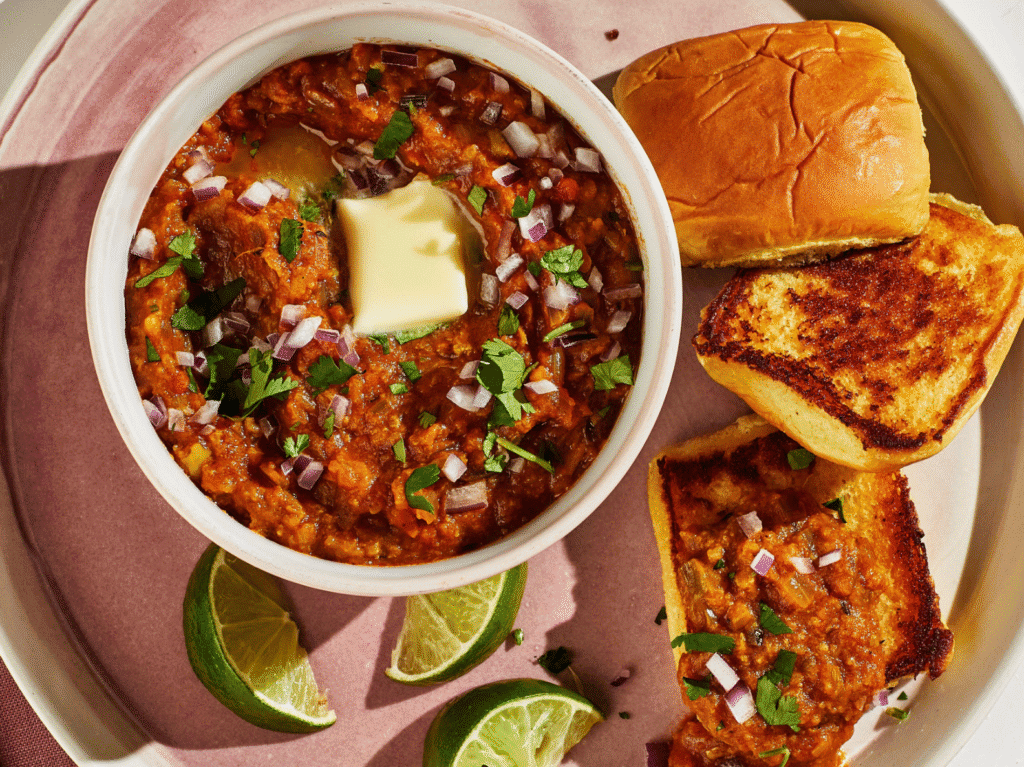
Transfer the hot bhaji to serving bowls or plates. Add a small knob of butter on top, if desired, and garnish with fresh coriander.
Serve immediately with warm butter-toasted pav, finely chopped onions, and lemon wedges.
For the classic street-food experience, squeeze some lemon over the bhaji, mix in a little chopped onion, and enjoy each bite with the toasted pav.
Restaurant Secrets for the Best Pav Bhaji
You do not need complicated ingredients to make delicious pav bhaji. A few small details can make a noticeable difference.
1. Cook the tomatoes properly
Raw or undercooked tomatoes can leave the bhaji tasting sharp. Cook them until they become soft and blend into the masala.
2. Mash the vegetables well
Restaurant-style bhaji is generally soft and well combined. Use a sturdy masher while the vegetables simmer in the masala to create a smooth texture.
3. Use pav bhaji masala
Pav bhaji masala gives the dish its distinctive flavour. Use a fresh, good-quality blend and adjust the amount according to its strength and your preferred spice level.
4. Add butter in stages
A little butter while cooking the masala and another small amount at the end create a rich taste. You can reduce the quantity if you prefer a lighter meal.
5. Allow the bhaji to simmer
Do not rush the final cooking stage. Simmering allows the vegetables and spices to blend together and helps develop a deeper flavour.
6. Adjust the colour naturally
Kashmiri red chilli powder usually provides a pleasant red colour without extreme heat. The exact shade will depend on the tomatoes, chilli powder, and masala you use.
7. Toast the pav just before serving
Pav tastes best when it is warm, buttery, and lightly crisp on the cut side. Toast it just before serving so that it does not become cold or soggy.
Which Vegetables Can You Add to Pav Bhaji?
Potatoes, cauliflower, and peas form a useful base, but you can change the vegetable combination depending on what you have available.
- Carrots add mild sweetness.
- Capsicum adds flavour and a little texture.
- Beetroot can create a deeper red colour, but use a small amount because its earthy taste can dominate.
- French beans can add variety.
- Pumpkin can make the bhaji softer and slightly sweeter.
For a familiar Mumbai-style flavour, avoid adding too many strongly flavoured vegetables. The goal is to maintain a balanced taste in which the masala, tomatoes, and butter remain noticeable.
What to Serve with Pav Bhaji
Pav bhaji is usually served as a complete meal, but these accompaniments make it even better:
- Butter-toasted pav
- Finely chopped onions
- Fresh lemon wedges
- Chopped coriander
- A little extra pav bhaji masala for seasoning
- A glass of chaas or another refreshing drink
Serve the bhaji hot and keep the pav separate until it is time to eat.
Common Mistakes to Avoid
Making the bhaji too watery: Add water gradually. If you accidentally add too much, simmer the mixture uncovered until it thickens.
Using too many spices: Too much chilli powder or pav bhaji masala can overpower the vegetables. Start with the measured quantities and adjust after tasting.
Burning the masala: Cook the spices over low to medium heat and add a little water if the mixture begins sticking.
Leaving large vegetable chunks: Mash the vegetables thoroughly for the soft texture associated with restaurant-style pav bhaji.
Adding lemon too early: Add lemon juice near the end so you can adjust the tanginess after the spices have cooked.
Toasting pav on very high heat: Excessive heat can burn the bread before the butter has a chance to coat it evenly. Use medium heat.
Is Pav Bhaji Healthy?
Pav bhaji contains vegetables such as potatoes, cauliflower, peas, tomatoes, and capsicum. These provide carbohydrates, fibre, and various vitamins and minerals.
However, the nutritional value depends on the serving size, the amount of butter and salt used, and the type and quantity of bread served with it. Restaurant-style pav bhaji can be high in calories and sodium when prepared with generous amounts of butter.
To make a lighter version at home, reduce the butter, add more vegetables, control the salt, and serve a moderate portion of pav. You can still enjoy the familiar flavour without making the dish excessively rich.
Frequently Asked Questions About Pav Bhaji
1. What is the secret to restaurant-style pav bhaji?
The key is properly cooked tomatoes and onions, a good pav bhaji masala, well-mashed vegetables, sufficient simmering, and a little butter for flavour. Balancing the salt, spice, and tanginess is equally important.
2. Which vegetables are best for pav bhaji?
Potatoes, cauliflower, green peas, capsicum, and tomatoes are commonly used. Carrots and a small amount of beetroot can also be added according to your preference.
3. Can I make pav bhaji without a pressure cooker?
Yes. Boil the potatoes, cauliflower, and peas in a covered pot until soft. Drain excess water and mash them before adding them to the masala. This method takes longer but works well.
4. Which masala is used in pav bhaji?
Pav bhaji masala is the main spice blend. It is available in Indian grocery stores and usually contains a mixture of ground spices. Different brands vary in flavour and heat, so adjust the quantity to taste.
5. How do I make pav bhaji red without food colouring?
Use ripe red tomatoes and Kashmiri red chilli powder. A small amount of beetroot can also deepen the colour, although it changes the flavour slightly. Artificial colour is not necessary for a tasty homemade version.
6. Can I prepare pav bhaji in advance?
Yes. You can prepare the bhaji several hours ahead and refrigerate it after cooling promptly in a suitable container. Reheat it thoroughly before serving, adding a little water if needed. Toast the pav fresh.
7. How do I make pav bhaji spicy?
Add extra green chilli or a little more red chilli powder. Increase the heat gradually and taste as you go, because pav bhaji masala may already contain chilli.
8. What is the difference between bhaji and pav?
Bhaji is the spiced, mashed vegetable mixture. Pav refers to the soft bread rolls served alongside it, usually toasted with butter.
9. Can I make pav bhaji without butter?
Yes. Use vegetable oil instead of butter, or use a suitable plant-based butter alternative. The dish will still taste good, although its flavour will be different from the classic buttery version.
10. How many people does this recipe serve?
This recipe serves approximately four people when served with eight pav rolls. Actual servings depend on appetite and portion size.
Conclusion
Restaurant-style pav bhaji is easier to make at home than many people think. With potatoes, cauliflower, peas, capsicum, tomatoes, onions, and a good pav bhaji masala, you can prepare a delicious meal without special equipment.
The most important steps are cooking the onion-tomato masala properly, mashing the vegetables until soft, simmering the bhaji long enough for the flavours to blend, and toasting the pav just before serving.
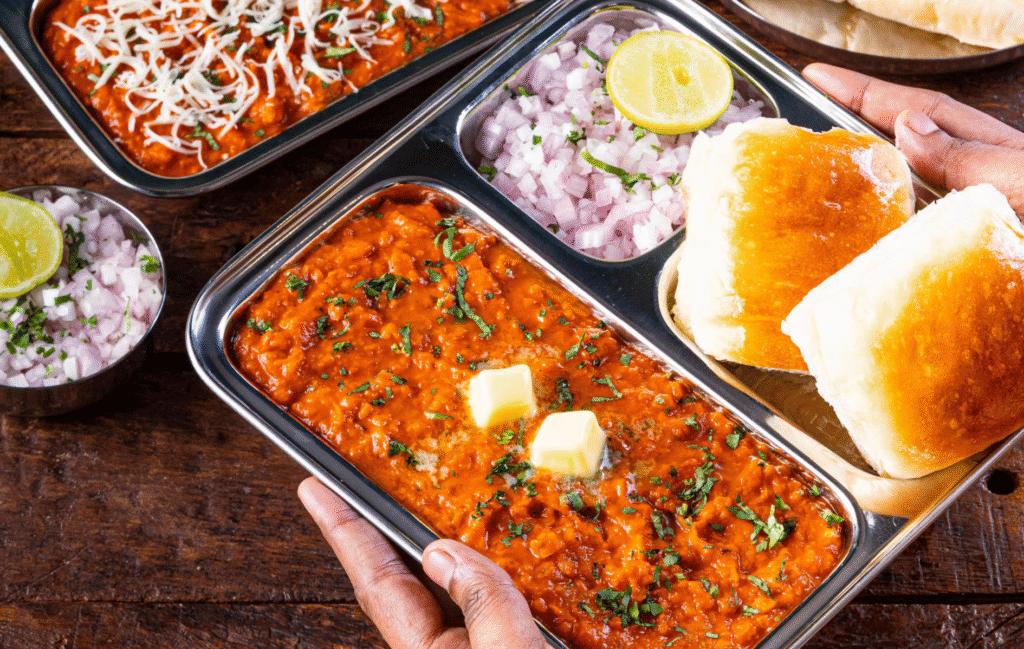
Try this recipe for your next family meal or weekend treat. Serve it hot with butter-toasted pav, fresh onions, coriander, and lemon wedges, and enjoy the familiar taste of Mumbai street food in your own kitchen.