Have you ever wanted to try sushi at home but thought it would be difficult to prepare? The good news is that making sushi is easier than it looks. With properly cooked rice, a few fresh vegetables, and seaweed sheets, you can prepare delicious homemade sushi without any special cooking skills.
Sushi is a famous Japanese dish known for its carefully prepared rice, attractive presentation, and fresh ingredients. Although many people associate sushi with raw fish, there are plenty of vegetarian options made with cucumber, carrot, avocado, and other vegetables.
In this easy sushi recipe, you will learn how to cook sushi rice, prepare a simple vegetarian filling, roll sushi using nori sheets, and cut neat sushi pieces at home. You will also find useful tips to help you get better results on your first attempt.
What Is Sushi?
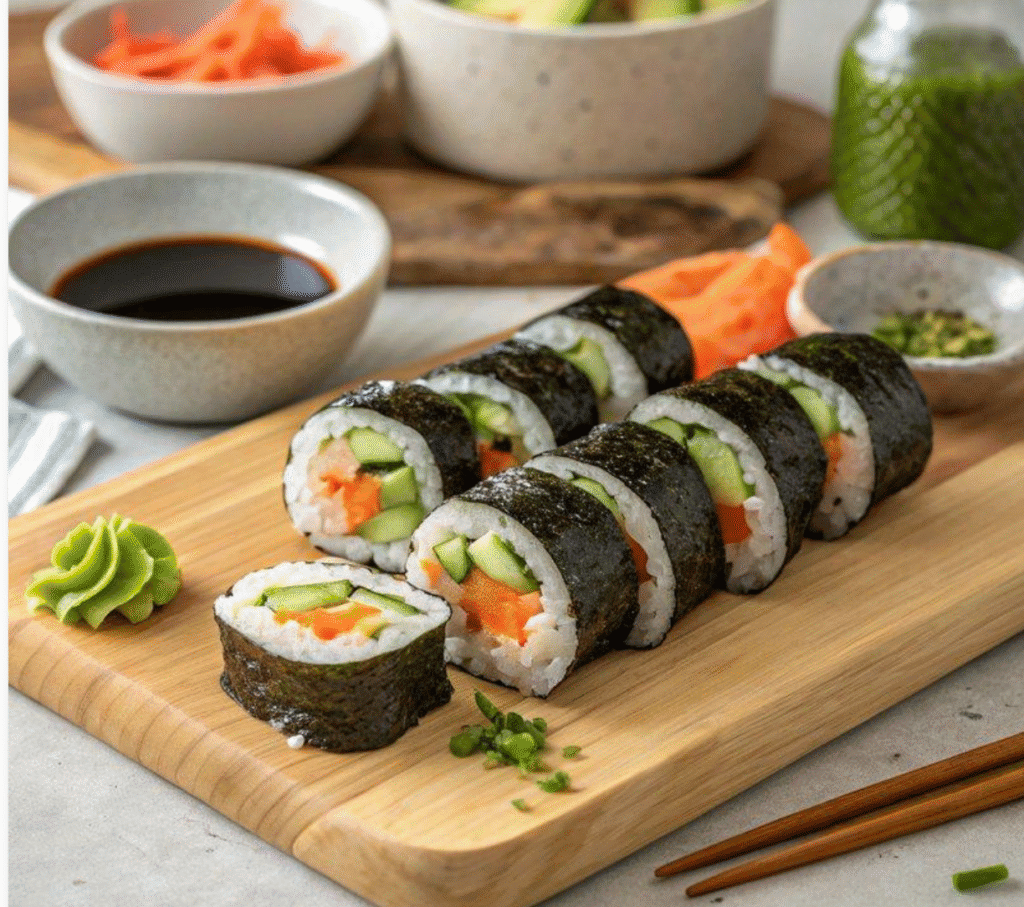
Sushi is a traditional Japanese dish made with rice seasoned with vinegar, sugar, and salt. Depending on the variety, it may be combined with vegetables, seafood, egg, or other ingredients.
One popular variety is makizushi, in which seasoned rice and fillings are rolled inside a sheet of dried seaweed called nori. The roll is then sliced into bite-sized pieces.
For this homemade recipe, we will prepare vegetarian maki sushi using cucumber, carrot, and avocado. You can replace or add fillings according to your taste.
Homemade Sushi Recipe Details
- Preparation time: 25 minutes
- Cooking time: 20 minutes
- Cooling time: 15–20 minutes
- Total time: Approximately 60–65 minutes
- Servings: 2 people
- Cuisine: Japanese
- Difficulty: Easy to moderate
Ingredients for Vegetarian Sushi
The following quantities make approximately 20–24 small sushi pieces, depending on how thick you cut the rolls.
For the sushi rice
- 200 g Japanese short-grain rice
- 250 ml water, or as directed by the rice packaging
- 3 tablespoons rice vinegar
- 1 tablespoon sugar
- ½ teaspoon salt
For the vegetable filling
- 4 sheets of nori (dried seaweed)
- 1 medium cucumber
- 1 medium carrot
- 1 ripe but firm avocado, optional
- 100 g cream cheese, optional
For serving
- Soy sauce, as required
- Pickled ginger, optional
- Wasabi, optional
Ingredient tip: Japanese short-grain rice is best because it becomes sticky enough to hold the roll together. Ordinary long-grain basmati rice is less suitable because its grains remain separate. If Japanese rice is unavailable, look for sushi rice or another short-grain rice variety.
How to Make Sushi at Home Step by Step
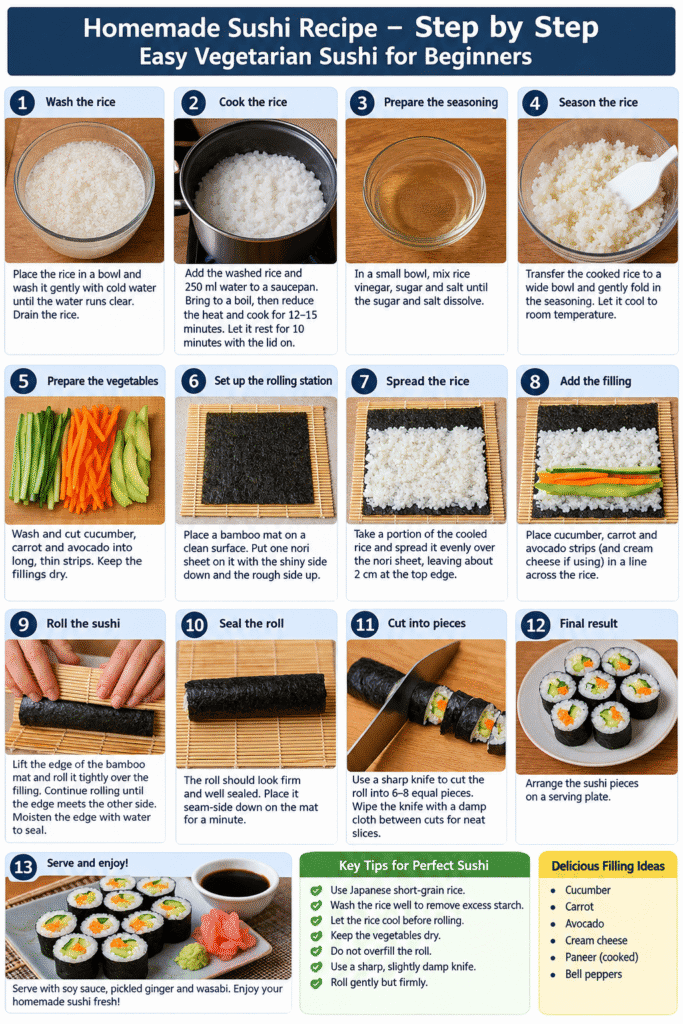
Step 1: Wash the rice
Place the rice in a bowl and cover it with cold water. Gently swirl the grains with your hand, then drain the cloudy water.
Repeat this process several times until the water becomes clearer. Washing removes excess surface starch and helps the rice cook more evenly.
Drain the rice thoroughly before cooking.
Step 2: Cook the sushi rice
Add the washed rice and 250 ml water to a saucepan with a tight-fitting lid, adjusting the water if your rice packaging recommends a different amount.
Bring it to a boil, then reduce the heat to low and cover the pan. Cook for approximately 12–15 minutes, or until the water has been absorbed and the rice is tender.
Turn off the heat and let the rice rest, covered, for another 10 minutes. Avoid lifting the lid while the rice is cooking.
A rice cooker can also be used if you follow its instructions for short-grain rice.
Step 3: Prepare the sushi seasoning
In a small bowl, combine the rice vinegar, sugar, and salt. Stir until the sugar and salt dissolve.
Transfer the cooked rice to a wide, non-metallic bowl if available. Pour the seasoning over the rice and gently fold it through using a rice paddle or spatula.
Avoid crushing the grains. Let the rice cool until it is close to room temperature before rolling. Do not refrigerate it to cool quickly, as this can make it hard.
Step 4: Prepare the vegetables
Wash the cucumber and carrot thoroughly. Cut them into long, thin strips that will fit across the nori sheet.
If using avocado, remove the skin and stone, then slice the flesh into thin strips.
Keep the fillings dry. Excess moisture can make the nori soft and cause the sushi roll to fall apart.
Step 5: Set up your sushi rolling station
Place a bamboo sushi mat on a clean work surface. If you do not have one, you can use a clean, flexible kitchen mat covered with food-safe plastic wrap.
Place one nori sheet on the mat with its shiny side facing down and the rough side facing up.
Keep a small bowl of water nearby to wet your fingers. Sushi rice is sticky, so slightly damp hands make it much easier to spread.
Step 6: Spread the rice over the nori
Take a portion of the cooled, seasoned rice and gently spread it over the nori sheet.
Cover most of the sheet with a thin, even layer of rice, leaving an uncovered strip of approximately 2 cm along the far edge. Avoid pressing the rice too firmly, as this can make the roll dense.
If the rice sticks to your hands, dampen your fingers again.
Step 7: Add the vegetable filling
Arrange a few strips of cucumber and carrot in a horizontal line across the rice, about one-third of the way up from the edge closest to you.
Add avocado or a small amount of cream cheese if desired. Avoid adding too much filling because an overfilled roll is difficult to close neatly.
For your first attempt, keep the filling simple.
Step 8: Roll the sushi tightly
Lift the edge of the bamboo mat closest to you and fold the nori over the filling.
Use your fingers to hold the ingredients in place while rolling the mat forward. Apply gentle, even pressure to form a compact cylinder without crushing the rice.
Continue rolling until the uncovered strip of nori reaches the outside. Moisten that edge lightly with water and press it against the roll to seal.
Remove the mat and place the roll seam-side down for a minute.
Step 9: Cut the sushi into pieces
Use a sharp knife with a clean, slightly damp blade. Trim the ends if necessary, then cut each roll into six to eight pieces.
Wipe the knife between cuts to prevent the rice from sticking and to keep the slices neat.
Repeat the process with the remaining ingredients.
Step 10: Serve your homemade sushi
Arrange the sushi pieces on a serving plate. Serve with soy sauce, pickled ginger, and wasabi if you enjoy them.
Enjoy the sushi soon after preparation for the best texture and flavour.
Best Vegetarian Sushi Filling Ideas
One of the best things about homemade sushi is that you can change the fillings to suit your preferences.
1. Cucumber Sushi
Use thin strips of cucumber with seasoned sushi rice. This is one of the simplest and freshest vegetarian sushi options.
2. Avocado Sushi
Ripe avocado adds a creamy texture and mild flavour. Combine it with cucumber for a simple, satisfying roll.
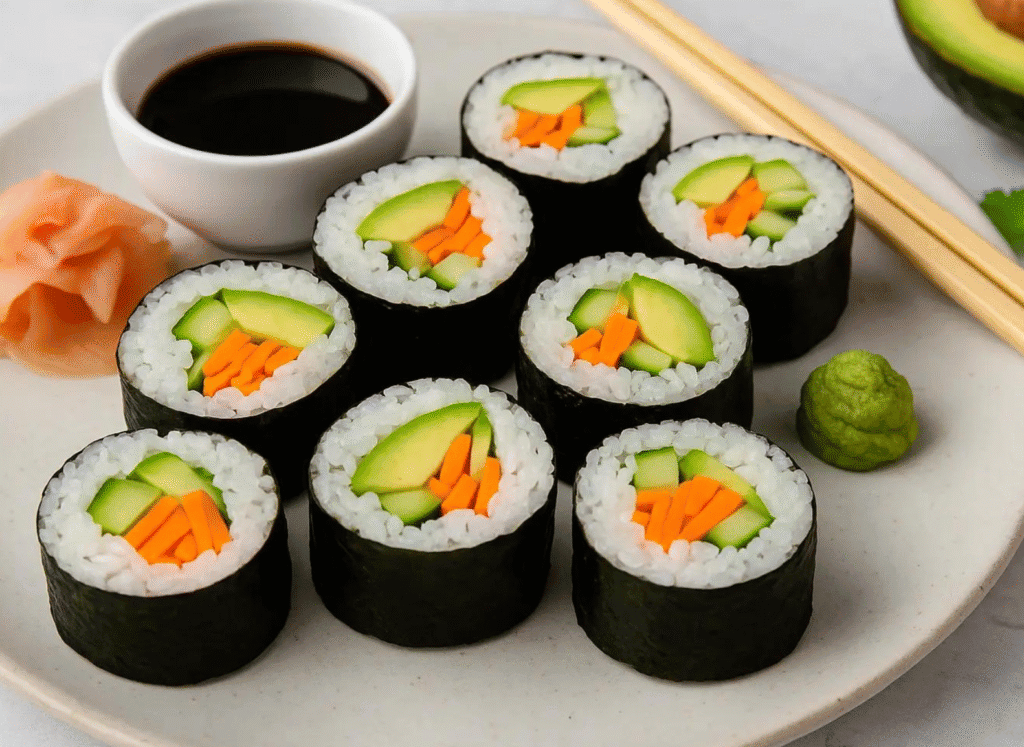
3. Carrot and Cucumber Sushi
Use thin carrot and cucumber strips for a colourful vegetable filling with a pleasant crunch.
4. Cream Cheese Sushi
Add a thin strip of cream cheese with cucumber or avocado for a richer, creamy filling.
5. Paneer Sushi Fusion
For an Indian-inspired variation, use cooked, seasoned paneer with cucumber and carrot. Let the paneer cool before assembling the roll, and avoid wet sauces that could make the nori soggy. This is a fusion variation rather than a traditional Japanese filling.
Tips for Making Perfect Sushi at Home
Use the right rice. Short-grain Japanese rice helps the roll hold together. The rice should be sticky but not mushy.
Do not overfill the roll. A small amount of filling makes rolling easier and produces neater slices.
Keep your hands slightly wet. This prevents the rice from sticking to your fingers.
Use a sharp knife. Clean the blade between cuts for attractive sushi pieces.
Avoid wet fillings. Dry the vegetables before adding them to the rice.
Roll firmly but gently. The roll should be compact enough to hold its shape without squeezing out the filling.
Do not leave sushi at room temperature for too long. Cooked rice needs careful handling. Refrigerate leftovers promptly and follow food-safety guidance; for the best quality, make sushi fresh and eat it soon after preparation.
Is Sushi Healthy?
Vegetarian sushi can be a balanced meal because it combines rice with vegetables such as cucumber, carrot, and avocado.
The nutritional value depends on the ingredients, portion size, and sauces used. Cream cheese and mayonnaise-based sauces add fat and calories, while soy sauce can contain considerable sodium.
For a lighter option, use plenty of vegetables, keep creamy sauces moderate, and serve soy sauce on the side.
Frequently Asked Questions About Sushi
1. Can I make sushi at home without a bamboo mat?
Yes. A clean, flexible kitchen mat covered with food-safe plastic wrap can work as an alternative. Roll slowly and apply even pressure to help the sushi hold its shape.
2. Which rice is best for sushi?
Japanese short-grain rice is ideal because it becomes sticky after cooking. Sushi rice sold specifically for this purpose is a convenient choice.
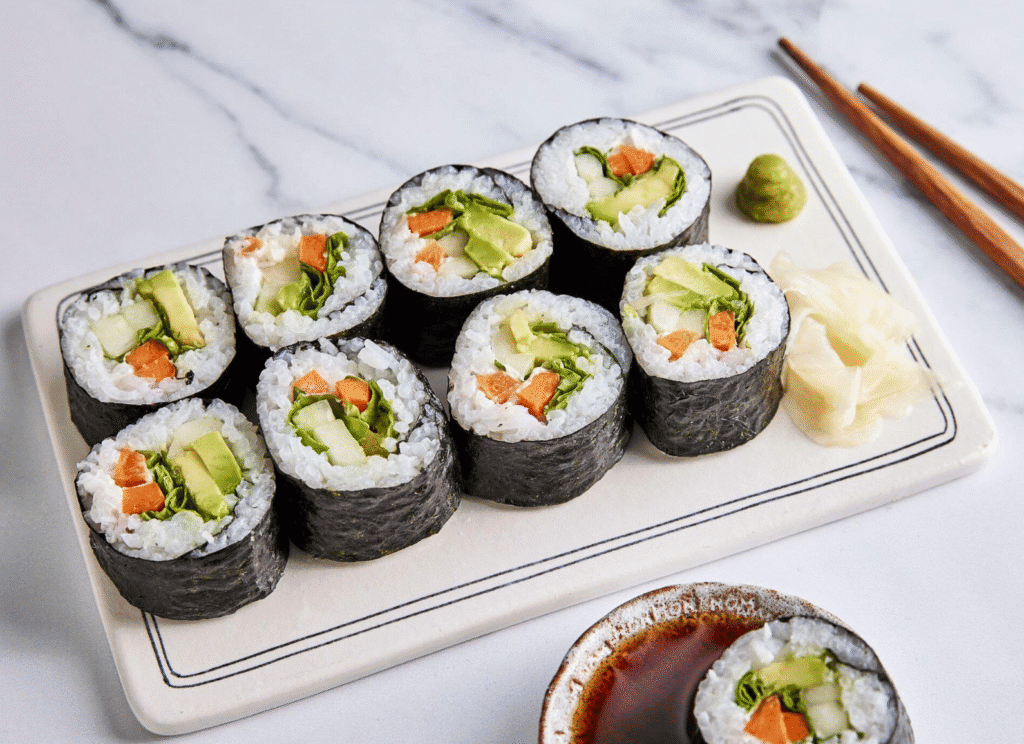
3. Can I make sushi without raw fish?
Absolutely. Vegetarian sushi made with cucumber, carrot, avocado, or cooked fillings is a popular alternative. Sushi does not have to contain raw fish.
4. What is nori in sushi?
Nori is dried edible seaweed used to wrap many types of sushi rolls. It provides structure and adds a distinctive savoury flavour.
5. Can I use basmati rice for sushi?
Basmati rice is not recommended because its long grains are less sticky and the roll may fall apart. Short-grain rice produces better results.
6. Why does my sushi roll fall apart?
Common reasons include using unsuitable rice, spreading the rice too thickly, adding too much filling, or rolling too loosely. Use short-grain rice and roll gently but firmly.
7. Is sushi vegetarian?
Some sushi varieties are vegetarian, while others contain fish, seafood, egg, or meat. Check the ingredients carefully when buying sushi or eating at a restaurant.
8. Can I prepare sushi in advance?
It is best prepared shortly before serving. If you need to make it ahead, refrigerate it promptly in a covered container and follow food-safety guidance. The rice and nori may become firmer or softer during storage.
9. What can I use instead of rice vinegar?
Seasoned rice vinegar is the most convenient option. If unavailable, a mild vinegar can be used in a pinch, but its flavour may differ. Start with a small amount and adjust to taste.
10. What should I serve with vegetarian sushi?
Soy sauce, pickled ginger, and wasabi are common accompaniments. You can also serve miso soup or a light vegetable salad.
Conclusion
Making sushi at home is a fun way to try Japanese cooking without needing complicated equipment. With short-grain rice, rice vinegar, nori sheets, and fresh vegetables, you can prepare delicious vegetarian sushi in your own kitchen.
The first roll may not look perfect, but practice will help you spread the rice evenly, control the filling, and roll each piece neatly. Start with cucumber and carrot, then experiment with avocado, cream cheese, or your favourite cooked fillings.
Prepare the sushi fresh, serve it with your favourite accompaniments, and enjoy homemade Japanese-inspired food with family and friends.